
Money
Snowball vs. Avalanche: Pick a Debt Payoff Method
TL;DR
- Both methods have you pay at least the minimum on every debt, then put extra money toward one debt at a time.
- The snowball method targets the smallest balance first. The avalanche method targets the highest interest rate first.
- Avalanche usually costs less interest if you follow it to the end. Snowball can be easier to stick with because the first debt may be paid off sooner.
- Run your own balances, APRs, and minimums in the calculator before you choose. A plan you abandon helps less than a slightly slower plan you finish.
If you have more than one debt — a credit card, a store card, a personal loan, a car loan — the hard part is often not the arithmetic. It is deciding where the extra money goes after you have made every minimum payment. Two common methods show up again and again: the debt snowball and the debt avalanche. They are not competing products. They are two ways to order the same work. The Consumer Financial Protection Bureau publishes public guidance on reducing debt; this page explains the two orders in plain language so you can compare them with your own numbers. It is not personal financial advice, and it does not tell you which debts to keep or refinance.
What both methods share
In both plans you keep paying at least the minimum on every account, on time, unless you have a formal arrangement with the lender. Late fees and penalty rates can wipe out the benefit of a clever order. You also pick an extra amount — even a small one — that will go to a single target debt. When that debt is paid off, the amount you had been sending there (minimum plus extra) rolls to the next target. That roll-forward is the “snowball” in the loose sense people use for both methods. The difference is only which debt is the target.
Before you choose an order, write down each debt’s name, current balance, annual percentage rate (APR), and minimum payment. Use the statement, not your memory. If a rate is promotional and will rise, write the current rate and the date it changes so you can revisit the plan.
The snowball method
The snowball method sends the extra payment to the smallest balance first, regardless of interest rate. Larger or higher-rate debts get only their minimums until the small one is gone. The advantage is psychological and practical: you may get a first payoff sooner, and you have one fewer account to track. The disadvantage is that a small, low-rate debt might be paid before a larger, high-rate card, so you can pay more interest overall if you follow the method all the way through.
The avalanche method
The avalanche method sends the extra payment to the debt with the highest APR first, regardless of balance. The advantage is mathematical: more of your money goes toward the costliest interest sooner, so the total interest is often lower if you stay with the plan. The disadvantage is that the first payoff can take longer if the high-rate balance is also large. Some people lose steam when the first account does not close quickly.
How to choose without guessing
There is no single right answer for every household. If the interest difference between the two plans is small, the plan you will actually follow is the better one. If one card has a much higher APR than the rest, avalanche may save a noticeable amount; the only way to know is to run the numbers. Use the debt payoff calculator on this site with your real balances, APRs, minimums, and extra payment. Compare the estimated months and the estimated interest. The calculator uses a simple monthly interest model and does not include fees, so treat the result as a comparison, not a promise.
Once you pick a method, make the minimums automatic if you can, and send the extra to the current target on the same day you get paid. When an account reaches a zero balance, ask the lender how to close or stop using it if that is your plan, and point the full payment at the next target. Revisit the list if a rate changes or if your extra payment has to drop for a month. A written order is useful only if it still matches the statements in your hand.
If you are behind on payments, or if a collector is involved, look at the CFPB’s resources on debt collection and handling bills, and consider speaking with a qualified counselor or advisor. A payoff method assumes you can make the minimums. If you cannot, the order of extra payments is not the first problem to solve.
What the calculator cannot decide for you
The comparison will not tell you whether to close a card, whether to transfer a balance, or whether a hardship program is a better path. Those are separate decisions with their own costs and credit effects, and they belong in a conversation with the lender or a qualified advisor. The calculator also cannot see a missed grocery week or a car repair. If you have to lower the extra payment for a month, you have not failed the method. You have only slowed it. Keep the minimums going, then raise the extra again when you can.
Couples and households sharing bills should agree on the target debt out loud. A snowball plan falls apart if one person sends extra money to a different account. Write the current target on the same page as the paycheck plan, and update it when an account is paid off. The “best” method is the one that still matches your statements three months from now.
Sources
Try a free tool: Debt Payoff Calculator. Compare the debt snowball and avalanche methods with your balances, APRs, and minimums. See estimated interest and a month-by-month snapshot.
Optional
A template if you want one
Use these if you want a ready-made file. The guides and tools work without them.
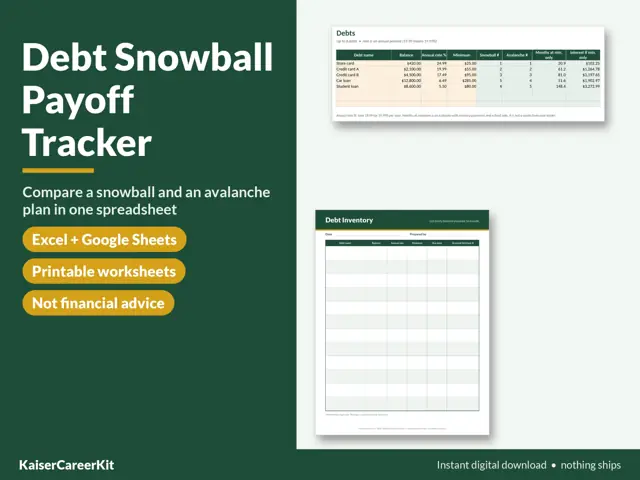
Debt Snowball Spreadsheet
Debt Snowball Payoff Tracker: a spreadsheet that compares a snowball plan (smallest balance first) and an avalanche plan (highest rate first) across up to 8 debts and 72 months, plus printable…
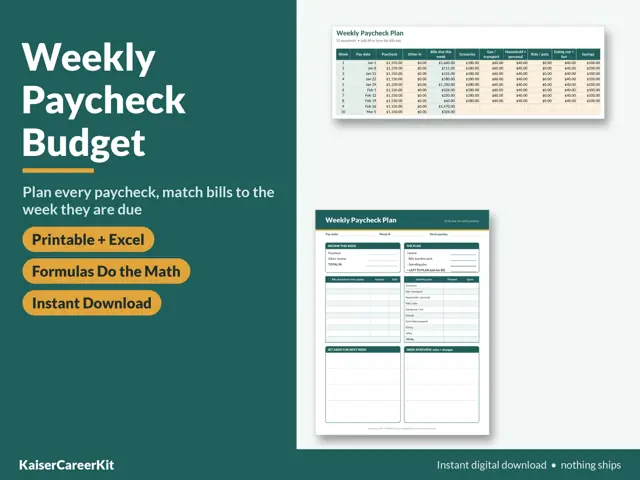
Weekly Paycheck Budget Planner
Weekly Paycheck Budget Planner: plan every paycheck, see which bills are due each pay week, and track sinking funds, debt payoff and savings.
Money Bundle
Our money and business templates in one download. See the full contents list on the checkout page.
Also on Gumroad (opens in a new tab)
More like this
Money
How to Build a Paycheck-to-Paycheck Budget
Build a budget around each payday: list take-home pay, assign every bill to a check, and keep a small buffer for timing surprises.
Free printable
Get the free Christmas word search
Print a sample of our holiday word search puzzles for family game night, the classroom, or a quiet evening with coffee. Big, easy-to-read puzzles.
Free download, no purchase needed. The checkout page may ask for an email address to deliver the file.