
The Northern Garden Journal · Vegetable Growing
How to Plan Next Year's Vegetable Garden from the Seed Catalog
Late November is when northern gardeners actually plan. The beds are frozen or soon will be, the catalogs show up, and you still remember what produced and what sulked. A short evening with last year's notes and a seed list will do more for next summer than a big order placed in a hurry in March.
This plan is for Minnesota and other short-season gardens in zones 3b–4a, where the frost-free stretch is roughly 120–140 days. Use your own frost dates — the same ones in our month-by-month planting calendar — not a catalog photo from a longer season.
Start With What You Already Have
Before you order anything, dump the seed box on the table.
- Keep packets that are still within a reasonable life and that you actually used or still want. Most vegetable seed stays useful for two or three years if it has been kept cool and dry; onion, parsley, and parsnip seed is shorter-lived and is the first to replace.
- Set aside leftovers from crops that failed because of weather or timing, not because the variety was wrong. Those are worth trying once more, on a better date.
- Compost or discard seed that is damp, moldy, or so old you cannot remember buying it. Doubtful seed wastes a spring window you cannot get back.
Write a simple inventory: crop, variety, year on the packet, and a rough count. The Square Foot Garden Planner & Logbook has a seed inventory section for exactly this, and the Square Foot Garden Planner Spreadsheet will hold the bed layout once you decide what goes where.
Read Days to Maturity Against Your Season
Catalogs are written for a wide audience. Your job is to read them as a short-season gardener.
- Days to maturity are usually counted from transplant for tomatoes and peppers, and from sowing for direct-seeded crops. Leave a margin. A cool June or a slow start can add a couple of weeks, and you still need to finish before the first fall frost.
- Choose earlier types first, then add one longer-season experiment if you have a warm wall, a tunnel, or a habit of starting seeds indoors on time. Our post on the best vegetables for Minnesota gardens is a practical short list if you are tempted to order everything.
- Watch the words "heat," "long season," and "late." Those are warnings here, not boasts.
- For tomatoes and peppers, plan to start seed indoors. The timing is in Starting Seeds Indoors for a Short Northern Season. Do not order a long list of those crops unless you already have lights and a hardening-off plan.
You do not need a new variety of every vegetable. Two or three tomato types, one reliable bean, and the greens and roots you actually eat will fill more plates than a dozen untried packets.
Sketch the Beds Before You Spend
On a rough map of your beds — even a pencil sketch — place the crops you know you want. Put tall crops where they will not shade the rest. Leave a little space for a second sowing of lettuce, beans, or carrots, instead of filling every foot in May.
If you garden in squares, the free Garden Planner and our square-foot layout guide will keep the spacing honest. The point is not a pretty diagram. It is seeing, before the order goes in, that you have too many tomatoes and nowhere for the fall carrots.
Order Once, on a Tight List
Make a list with three columns: need (no seed on hand), want (a backup or a new trial), and skip. Order the "need" column first. Sleep on the "want" column for a day. Most of us over-order in November and then cannot sow it all in May.
If a company sells out of an early variety, have a second choice written down so you are not stuck with a late one. You do not have to place the order tomorrow, but the careful types go first, and late November is a calm time to do this.
Seed-Catalog Planning Checklist
- Seed box inventoried: keep, try once more, or discard
- Frost-free window written at the top of the list
- Days to maturity checked against that window, with a little margin
- Indoor-start crops limited to what you can light and harden off
- Beds sketched, including space for a second sowing
- Order list split into need, want, and skip
Let Next Year Be a Little Smaller, and a Little Earlier
A short season rewards a tight list and an earlier start, not a bigger catalog order. Short-Season Vegetable Gardening is Timothy Kaiserlik's practical guide to growing more food in zones 3, 4, and 5, and it is the book to keep beside the catalogs.
Closing tip: This week, empty the seed box, write down what you still have, and sketch next year's beds before you buy a single packet. The order is the last step, not the first.
From Tim’s bookshelf
Go deeper with a book
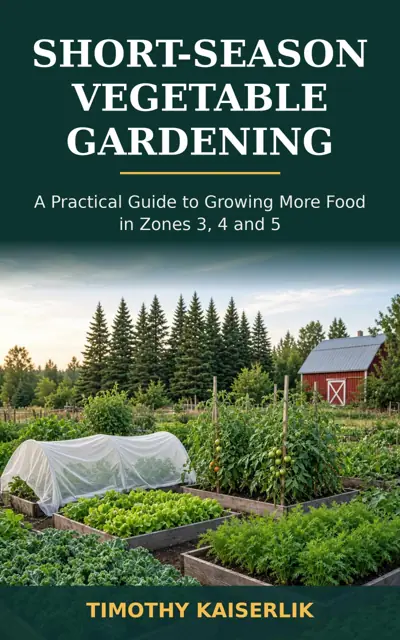
Short-Season Vegetable Gardening
A Practical Guide to Growing More Food in Zones 3, 4 and 5
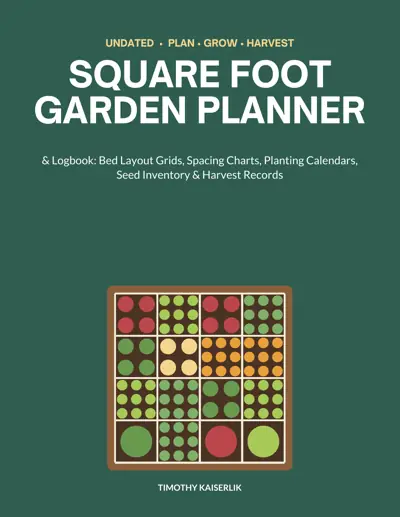
Square Foot Garden Planner & Logbook
An Undated Vegetable Garden Journal with Bed Layout Grids, Spacing Charts, Planting Calendars, Seed Inventory & Harvest Records

Houseplants Through a Northern Winter
Keeping Indoor Plants Healthy from First Frost to Spring Thaw
Further reading
The Year-Round Vegetable Gardener (opens in a new tab) by Niki Jabbour
Season extension, succession planting, and cold-weather crops from a Nova Scotia gardener — a strong fit for short northern seasons.
More like this
Gift Guide
The Zone Garden Encyclopedia, Book 1: A Must-Have Christmas Gift for Northern Gardeners
Why a USDA zone number is not a climate, and why The Zone Garden Encyclopedia, Book 1, is a must-have Christmas gift for zone 3–4 gardeners.
Seed Starting
Starting Seeds Indoors for a Short Northern Season: Timing, Lights, and Hardening Off
Learn when to start seeds indoors in Minnesota, how to set up grow lights, and how to harden off seedlings so they thrive in a short northern season.
Vegetable Growing
The Best Vegetables for Minnesota Gardens: Cold-Hardy Picks That Actually Produce
The best vegetables for Minnesota gardens: cold-hardy varieties that produce in zone 3b–4a, plus a simple succession planting plan for harvests all season.
Free printable
Get the free Christmas word search
Print a sample of our holiday word search puzzles for family game night, the classroom, or a quiet evening with coffee. Big, easy-to-read puzzles.
Free download, no purchase needed. The checkout page may ask for an email address to deliver the file.